
How to Use Map Embeds to Build Real Local Authority
In the evolving landscape of google business profile seo, many business owners mistake local search optimization for a simple checklist of keywords and citations. However, as we move through 2026, the paradigm has shifted. Local SEO is no longer just a marketing tactic; as industry veteran Rashid Rehman often emphasizes, it is “infrastructure.” To rank google business profile assets effectively, you must treat your website as a digital foundation that validates your physical existence to Google’s algorithm.
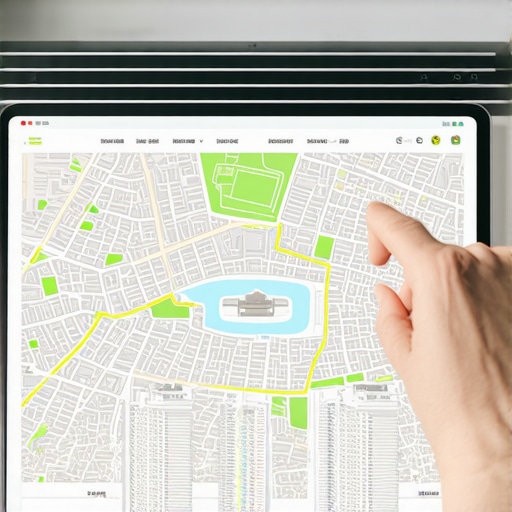
The Google Map embed is a critical component of this infrastructure. It is not merely a visual widget designed to help customers find your front door; it is a high-signal bridge that connects your website’s entity to your Google Business Profile (GBP). Following the May 2026 Core Update, Google has placed an even higher premium on “real-world relevance” signals. In an era dominated by AI-generated content, a properly implemented map embed serves as a verifiable anchor, proving to search engines that your business operates exactly where you claim it does. This guide will detail how to leverage a google maps ranking service mindset to turn a simple iFrame into a powerhouse for local authority.
Beyond “Visual Fluff”: Do Map Embeds Actually Help Rankings?
A common debate within SEO communities on platforms like Reddit and Facebook is whether embedding a map actually moves the needle for rankings. Skeptics argue it’s just an iFrame, while proponents claim it’s a “magic button.” The truth lies in the data. While an embed alone won’t fix a poorly optimized profile, it provides the “Relevance” signal necessary to compete in high-density markets.
Google’s local algorithm is built on three pillars: Proximity, Relevance, and Prominence. A map embed directly addresses Relevance. By embedding your specific GBP entity – not just a generic pin of your city – you are explicitly telling Google’s crawlers, “This website and this Google Business Profile represent the same entity.”
The SearchPilot case study offers compelling evidence for this approach. Their research found that including map components helped pages rank for a significantly wider range of local queries. The study concluded that maps serve as a “useful signal” for local search relevance, helping Google understand the geographic service area of a page more accurately. This is why map embeds are considered essential local seo ranking factors. When Google sees a consistent connection between your site’s content and your map location, your google maps ranking signals strengthen, leading to higher visibility in the coveted Local Map Pack.
For more on how these signals are changing, see our analysis on The Real Local SEO Trends to Watch in 2026.
The Technical “How-To”: Extracting the Right Embed Code
Not all map embeds are created equal. Many business owners simply search for their address on Google Maps and copy the code. This is a missed opportunity for google business profile optimization. To maximize authority, you must embed the map associated with your specific GBP “Share” link, which includes your unique CID (Cluster ID).
Step-by-Step Guide to High-Authority Embedding:
- Access Your Dashboard: Log in to the Google account that manages your profile and search for “my business” in Google.
- Select the “Share” Button: Within the GBP management interface, click on the “Share profile” icon.
- Choose “Embed a map”: Do not just copy the short link. Click the “Embed a map” tab.
- Select the Size: Choose “Medium” or “Large” depending on your design, but ensure the code contains your business name and not just a street address.
- Copy the HTML: This iFrame code contains specific parameters that link directly to your business entity in Google’s Knowledge Graph.
Using the correct CID-based embed ensures that every time a user (or a bot) loads your page, they are interacting with your specific business entity. If you are unsure if your current setup is optimal, using a google business profile audit tool can help identify gaps in your entity connection. Understanding how to rank google business profile assets starts with ensuring your technical implementation is flawless.
Strategic Placement: Where to Embed for Maximum Impact
Where you place your map is just as important as how you embed it. The goal is to create a “Geographic Relevance Loop” across your site. While the Contact Page is the standard choice, high-authority sites take it further with geo-targeted seo strategies.
1. The Homepage
For single-location businesses, a map embed in the footer or near the bottom of the homepage reinforces your primary location signal. This is the first place Google looks to establish your base of operations.
2. Service Area Pages (SAPs)
If you are a service area business seo professional (like a plumber or electrician), you likely have pages for different towns you serve. Do not use the same map for every page. Instead, embed a map that shows your service area or a map centered on that specific town to create hyperlocal seo relevance for that specific URL.
3. City Pages
If you have multiple physical locations, each city page seo must have its own unique map embed corresponding to the GBP for that specific branch. This prevents “cannibalization” where Google gets confused about which office should rank for a specific local search.
Proper placement ensures that you aren’t just showing a map to users, but providing a roadmap for Google’s crawlers to follow. For a deeper dive into these layouts, check out our Simplified Map Ranking Techniques: Step-by-Step Guide to Local Map Visibility.
Advanced Tactics: Schema Markup and Coordinate Matching
To truly dominate local search, you must pair your map embed with local schema markup. This is the “secret sauce” of google business profile authority. Schema is a specialized code (JSON-LD) that tells search engines exactly what your business is, where it is, and what it does in a language they understand perfectly.
The most critical factor here is NAP consistency seo (Name, Address, Phone). The data in your Schema must match your GBP exactly. Furthermore, you should include “GeoCoordinates” in your Schema. These coordinates (Latitude and Longitude) must match the coordinates hidden within your Google Map embed code.
When the coordinates in your Map iFrame, your LocalBusiness Schema, and your GBP all align, you create a “Triple-Threat” verification signal. This level of technical precision is what separates a standard local seo audit from a high-level authority-building campaign. Many agencies use specialized local seo software to ensure these data points are synchronized across the entire web, reducing the risk of algorithmic suppression due to inconsistent data.
Industry-Specific Applications: Contractors, Lawyers, and Medical
In high-competition niches, map embeds are a requirement for survival. Let’s look at how different industries use them to build authority:
Local SEO for Contractors
A roofer doesn’t just want to rank for “roofing.” They want to rank for “roof repair [City Name].” By embedding maps on pages dedicated to specific neighborhoods, contractors can signal to Google that they are active in those high-value zones, even if their main office is 20 miles away.
Local SEO for Lawyers
Lawyers often face the “proximity trap,” where they only rank within a few blocks of their office. To expand their reach, lawyers should embed maps on practice area pages that link back to their GBP, reinforcing their authority within the specific jurisdictions they serve. For more insight into the legal niche, read Why Most Lawyers Lose at Local SEO and What to Do Instead.
Local SEO for Dentists and Medical
For healthcare, trust is the primary ranking factor. A map embed paired with patient reviews (via a GBP widget) creates a “Trust Cluster.” This tells Google that the clinic is a prominent, well-frequented local entity, which is essential for local seo dominance.
Common Pitfalls and Performance Optimization
While map embeds are powerful, they can be double-edged swords if implemented poorly. The most common issue is site speed. A standard Google Map iFrame is “heavy” and can significantly slow down your page load times, hurting your Core Web Vitals.
To avoid this, use lazy loading for your maps. This ensures the map only loads when a user scrolls down to it, keeping your initial page load lightning-fast. Speed is a confirmed ranking factor, and a slow site can be the answer to the common question: “Why is my google business profile not ranking?“
Another pitfall is “Broken Entity Links.” If you change your business name or move locations, you must update your map embeds immediately. An embed pointing to an old address or a deleted profile is a “toxic” signal that can tank your local search visibility. Regularly tracking your rankings with a google maps rank tracker will alert you if a technical error has caused a sudden drop in your Map Pack position.
Conclusion & Action Plan
Building local authority is about creating a cohesive digital ecosystem where your website and your Google Business Profile work in perfect harmony. Map embeds are the glue that holds this ecosystem together. By moving beyond “visual fluff” and treating maps as a core part of your google maps seo strategy, you can secure a long-term competitive advantage.
Your 4-Step Action Plan:
- Audit: Check every page on your site. Are you using CID-based embeds or just generic addresses?
- Sync: Ensure your LocalBusiness Schema coordinates match your map embed exactly.
- Expand: Add unique map embeds to your City and Service Area pages.
- Monitor: Use professional gmb seo tools to track your proximity growth.
If you’re ready to get serious about your rankings, start with our Practical Local SEO Checklist for Owners Who Hate Tech. The “infrastructure” you build today will define your visibility for years to come.